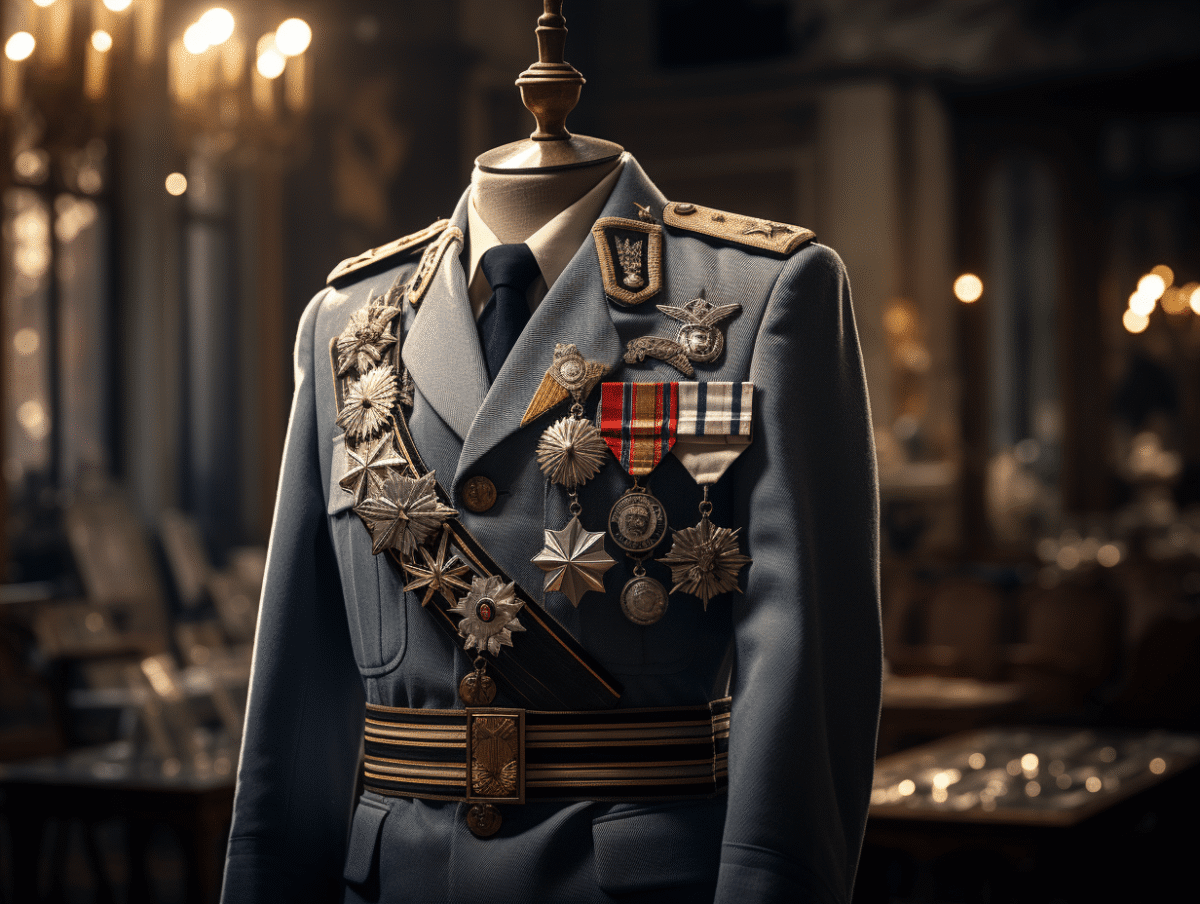
At the heart of French military history, enigmas and untold stories persist, shrouded in the veils of shadow and mystery. Forgotten strategies, secret missions, and unknown heroes weave a complex tapestry that has shaped the nation’s destiny. These secrets hidden in archives and the accounts of old soldiers seem to await passionate researchers to unearth them and rewrite chapters of history. They represent a precious legacy, carrying lessons for the future and a deeper understanding of past conflicts.
The Unknown Operations of French Military Strategy
Within French military history, the Algerian War remains a dark chapter, marked by acts and decisions that have long been silenced by the great silence. Men like Maurice Audin, an Algerian communist mathematician, or Moktar Boucif, a school director and member of the communist party, disappeared in the turmoil of this conflict, victims of repression. The struggles for power and the fierce fight against the National Liberation Front (FLN) led to clandestine operations and abuses whose precise details still elude public knowledge.
The Audin affair, a symbol of these disappearances, revealed an aspect of military strategy where torture and extrajudicial executions were commonplace, often orchestrated with impunity. Figures like General Massu have become emblematic of this repressive period, during which the French army waged a relentless battle against any form of support for the independence movement. The death of Félix Valat, a pied-noir mayor, and the subsequent disappearance of Moktar Boucif, accused without evidence, are examples of these hidden secrets that are only beginning to be unveiled thanks to the commitment of families and researchers.
Reconciliation with this past requires an uncompromising exploration of archives and testimonies. Some files, long sealed, are starting to reveal their silent testimonies, demanding from French society an act of acknowledgment and understanding. Historians such as Sylvie Thénault and Fabrice Riceputi tirelessly work to unearth these truths, thus laying new foundations for a more complete and just collective memory. These efforts to shed light on the obscure operations of the Algerian War challenge the traditional view of the French army’s involvement, contributing to a redefinition of official history.

The Management of Secrecy and Its Impact on Official History
The management of secrecy surrounding operations conducted in Algeria has long constituted an opaque veil over official history. Historians like Sylvie Thénault and Pierre Vidal-Naquet, armed with patience and scholarship, have had to confront administrative barriers to access historical archives. Their work has brought to light the Maurice Audin affair, an emblematic case of disappearance and torture, and other similar dramas concerning Algerian disappearances. It was only recently, under the impetus of President Emmanuel Macron, that the state announced the gradual opening of archives, thus promising a step towards acknowledgment of the facts.
The families of the victims, such as Josette Audin or Senouci Boucif, have borne the burden of uncertainty and pain, often faced with a wall of silence imposed by an administration reluctant to disclose sensitive information. The recent discovery by historian Fabrice Riceputi of an internal file at the Algiers Prefecture on Algerian disappearances constitutes a breach in this wall of secrecy. These documents, listing requests from families of the disappeared, provide tangible evidence of the mass of extrajudicial disappearances orchestrated by French law enforcement.
However, access to archives remains a constant battle for researchers and families. Despite announcements and measures taken, the slowness of procedures and the complexity of regulations regarding archives continue to hinder the complete revelation of this period. The efforts of those engaged in this quest for truth, such as Malika Rahal and Maïa Alonso, illustrate a struggle for memory and justice, essential for reconciling with this painful chapter of the past.