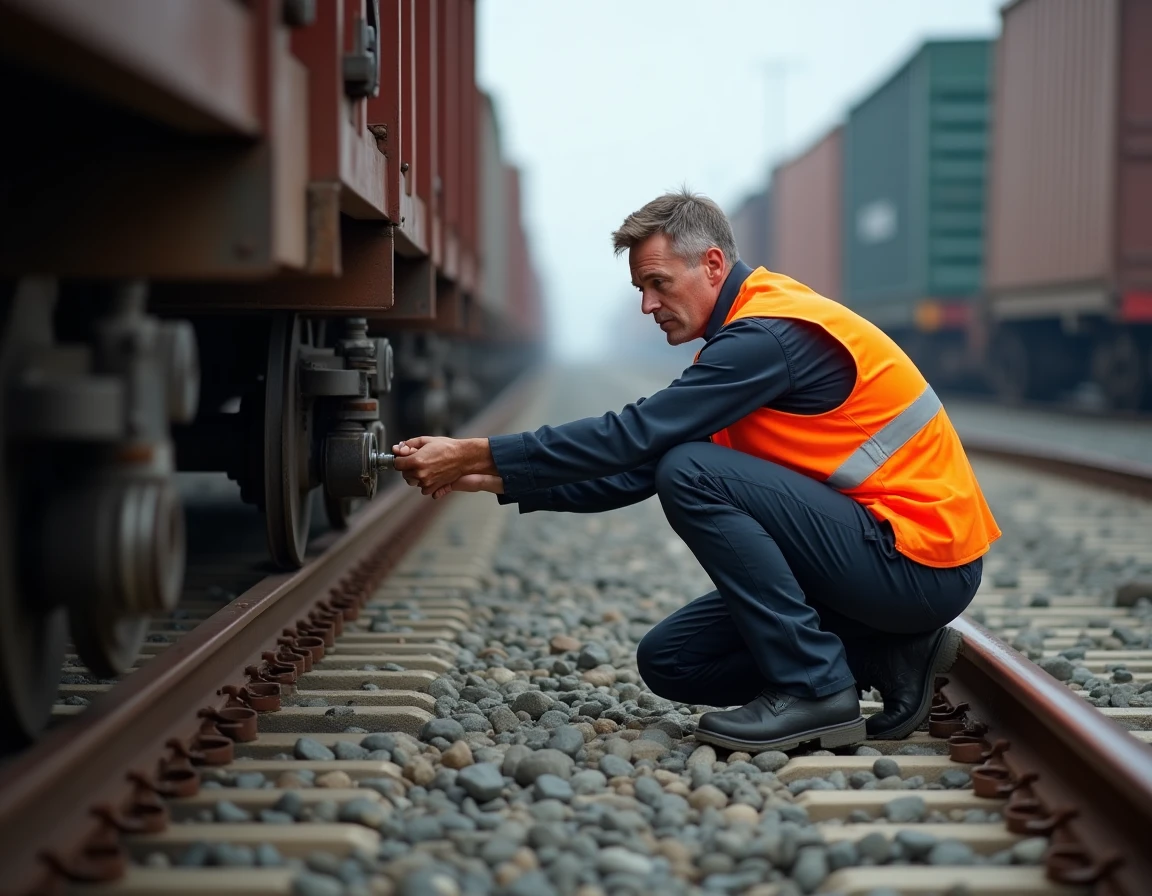
On a railway construction site, the wagonist is the person who inspects each wagon before its departure. They check the brakes, couplings, and running gear. If a defect escapes their notice, the entire freight traffic can be compromised. This technical profession, still not very visible, requires a specific skill set that combines mechanical know-how, regulatory rigor, and the ability to communicate under pressure.
Risk analysis on critical components of the wagon

Before discussing general skills, one point deserves to be addressed as a priority. Employers in rail freight are currently looking for profiles capable of conducting a formal risk analysis on each wagon. It’s no longer just a quick visual check.
Specifically, the wagonist examines three categories of components during each inspection: braking systems, running gear (axles, axle boxes, wheels), and couplings. For each, they must identify critical points, meaning the areas where wear or an anomaly could cause an incident on the line.
Have you ever seen an automotive mechanic examine a vehicle with a checklist? The wagonist does the same, but on rolling stock weighing several tens of tons, with tight time constraints. The difference is that their diagnosis must rely on documented maintenance plans, not just intuition.
To better understand the key skills of the wagonist profession, it is important to realize that this rigor in preventive and corrective maintenance has become an explicit selection criterion during recruitment.
RID regulation and transport of dangerous goods
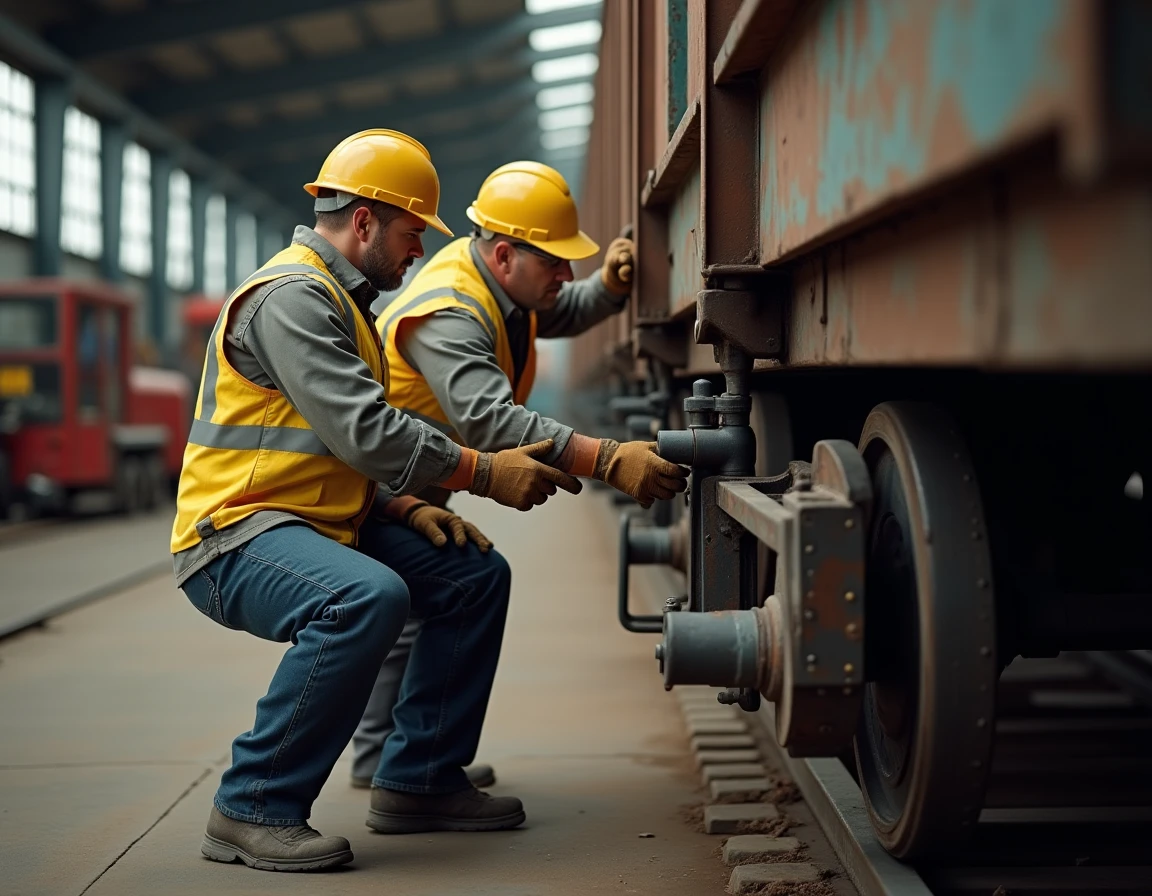
A wagon loaded with chemicals is not treated the same as a grain wagon. The wagonist assigned to petrochemical or chemical freight must master the provisions of the RID (Regulation concerning the international rail transport of dangerous goods). This regulation defines the conditions for packaging, marking, labeling, and loading for each category of product.
In practice, this means reading safety data sheets, checking the compliance of cabinets on tank wagons, and coordinating their checks with the ADR rules applicable to road transport. Why this dual reading? Because a wagon can switch from one mode of transport to another, and the requirements must remain consistent at each stage.
This skill has become an explicit recruitment criterion in recent years, particularly in freight companies operating on international corridors. A wagonist who can apply the RID without hesitation gains autonomy and responsibility.
What this changes on a daily basis
The wagonist trained in the RID does not just tick boxes. They are able to refuse to put a non-compliant wagon into circulation, even under commercial pressure. This decision-making ability is one of the most valued markers of professionalism by recruiters in the railway sector.
Inter-professional communication on the ground
The wagonist never works alone. On a train formation site, they interact with drivers, shunting agents, regulators, and sometimes directly with industrial clients shipping their goods.
The expected skill is not simply “knowing how to talk to colleagues.” It is a structured oral communication, capable of clearly, quickly, and unambiguously conveying a detected anomaly. A vague report on a braking defect can lead to a cascading delay, or even a safety incident.
- Reporting anomalies: precisely describe the wagon concerned (number, position in the train), the nature of the defect, and the estimated severity level.
- Intervention report: document in writing or on a tablet the actions taken, parts replaced, and checks performed.
- Coordination with the regulator: inform in real-time about the progress of checks so that the departure schedule remains realistic.
This relational dimension distinguishes the experienced wagonist from the beginner. The technique is learned in training, but the ability to communicate under time pressure is acquired in the field.
Digital tools and the digitization of the wagonist profession
Safety instructions, intervention schedules, and monitoring sheets are increasingly digitized in the railway sector. The wagonist now uses tablets to receive their mission orders, record their inspections, and report their observations.
No need to be a software developer. It’s enough to be comfortable with a professional application and to know how to fill out a digital form without errors. What matters is the reliability of the input: a poorly filled field can skew the entire maintenance tracking of a wagon.
Physical condition and endurance
The job is performed outdoors, in all weather conditions, often on irregular hours. Inspecting wagons involves bending down, climbing onto walkways, and handling sometimes heavy tools. A good physical condition is a real prerequisite, not just a simple item on a job description. Railway construction sites are not air-conditioned offices.
A wagonist considering a long career in this sector has every interest in maintaining their physical fitness as a vital work tool.
Training and access to the wagonist profession
Access typically requires specific railway training, often provided by the freight companies themselves or by specialized organizations. A background in mechanics, electromechanics, or industrial maintenance is a common entry point.
- CAP or professional baccalaureate in vehicle or industrial equipment maintenance, which provides the necessary technical foundations.
- Internal certifying training with a railway operator, covering safety, shunting procedures, and regulations.
- Additional modules on the RID for positions in chemical freight, accessible after initial training.
There are opportunities for advancement: team leader, internal trainer, or transition to planned preventive maintenance roles in workshops. The railway sector, under pressure for recruitment, values profiles that combine technical skills and documentary rigor.
The wagonist profession remains one of the few positions where the safety of hundreds of people and tons of goods relies on the expertise of a single technician, standing on the tracks, checking what no one else will see.