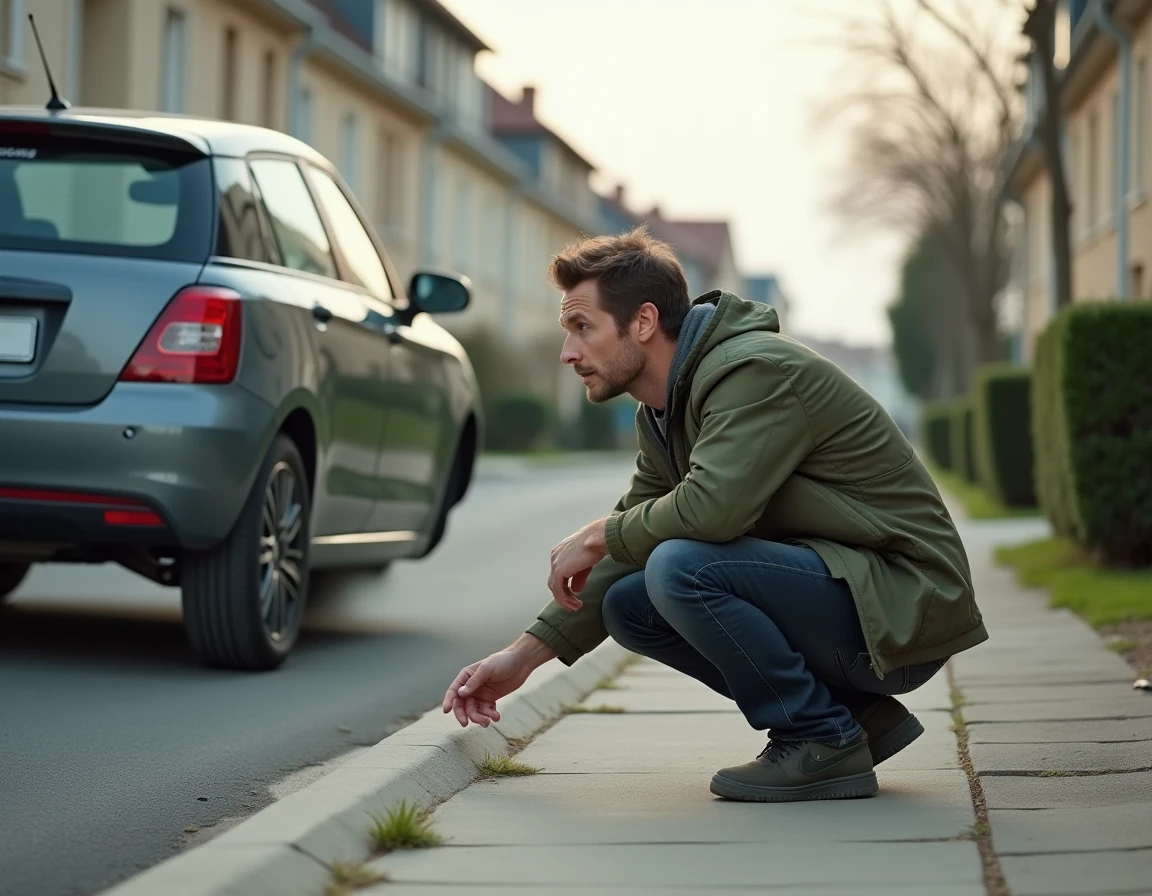
Parking on the sidewalk in front of one’s house in a housing estate generates recurring neighborhood conflicts. Before wondering if one risks a fine, the first question to settle concerns the legal status of the road: municipal public road or private road managed by a homeowners’ association. This status determines who can issue fines, on what basis, and with what penalties. The Highway Code only covers part of the issue.
Public road or private road in a housing estate: what the street status changes
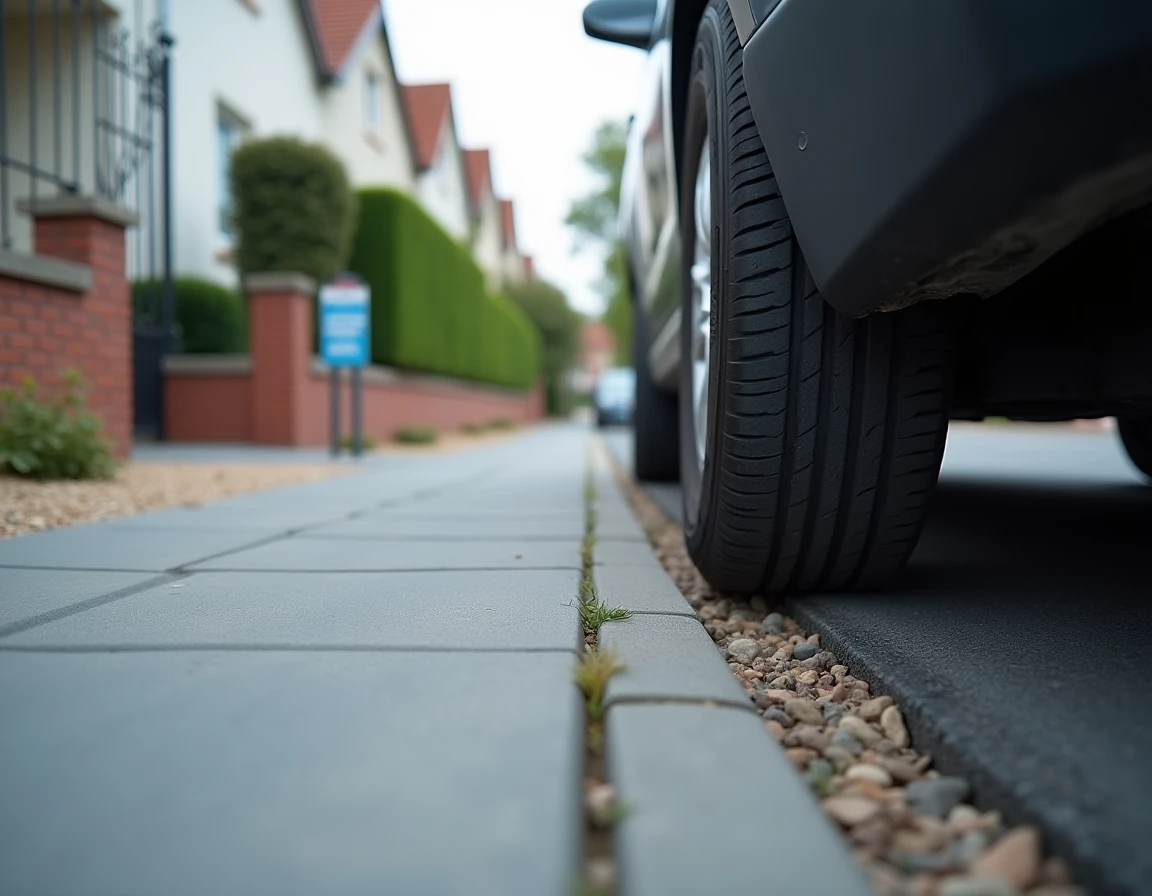
Most articles on the subject apply the Highway Code without distinguishing the status of the roadway. This is a mistake. The practical consequences vary greatly depending on whether the street in the housing estate has been transferred to the municipality or remains private.
| Criterion | Transferred road (public) | Private road (ASL/co-ownership) |
|---|---|---|
| Applicable text | Highway Code (article R417-11) | Specifications of the housing estate + internal regulations |
| Competent authority | Mayor (traffic police power) | ASL, property manager, or free homeowners’ association |
| Fines by municipal police | Yes, directly on the road | No, unless an agreement with the municipality |
| Towing possible | Yes, at the mayor’s decision | No (civil recourse only) |
| Fine for parking on the sidewalk | Contravention (inconvenient parking) | No criminal fine, but possible civil penalties |
When the road is public, the mayor fully exercises the parking enforcement power and can involve the municipal police. When the road remains private, the Highway Code does not apply directly: it is the specifications of the housing estate that take precedence.
To understand the parking rules on the sidewalk in front of a house in a housing estate, one must first check with the town hall or in the sales deed if the road transfer has taken place. This document is often found in the annexes of the sales agreement or with the town’s urban planning department.
Article R417-11 of the Highway Code: prohibition and exceptions on sidewalks

On a public road, parking on the sidewalk is prohibited by article R417-11 of the Highway Code. This prohibition aims to protect pedestrians, who are forced to walk on the roadway when the sidewalk is occupied by a vehicle.
The offense is classified as inconvenient parking. It results in a fine, whether the vehicle is parked on two wheels or four wheels on the sidewalk.
The exception of municipal authorization
The mayor can authorize parking on the sidewalk by municipal decree, on specific sections. This possibility exists in streets where the width of the sidewalk allows it without compromising the passage of pedestrians, strollers, and wheelchairs.
- The decree must be marked by vertical or horizontal signage on site; otherwise, the authorization is not enforceable
- The authorization never covers pedestrian crossings, garage entrances, or lowered curbs
- Authorized parking on the sidewalk remains subject to the rule of abusive parking: after seven days without movement, the vehicle may be towed (article R417-12)
Some municipalities reduce this timeframe by decree, sometimes to 24 or 48 hours in sensitive urban areas. Checking the municipal decrees posted at the town hall or on the municipality’s website can help avoid unpleasant surprises.
Specifications of the housing estate and parking restrictions
On a private road, the specifications of the housing estate serve as the reference text. This contractual document, attached to the sales deed of each lot, may impose stricter rules than the Highway Code.
Some specifications outright prohibit parking on common areas, including sidewalks. Others require each owner to park exclusively on their private land. Not having read the specifications does not exempt one from their application.
Who enforces these rules in a private housing estate
The municipal police do not intervene on a non-transferred private road, except by specific agreement. Compliance with the specifications falls under the free homeowners’ association (ASL) or the horizontal co-ownership syndicate.
- The ASL can formally notify a violating resident by registered mail
- In case of persistent refusal, the ASL can take the matter to the judicial court to obtain an injunction to remove the vehicle
- Daily financial penalties can be imposed by the judge until the violation ceases
- A directly affected neighbor can also act individually based on the abnormal neighborhood disturbance
The civil procedure is slower than a fine, but civil penalties can far exceed the amount of a fine.
Persistent parking in front of one’s house: what neighbors rarely tolerate
A vehicle permanently parked in front of a neighbor’s house, on the sidewalk or even on the roadway, constitutes a major irritant in a housing estate. The proximity of homes amplifies tensions.
On public roads, article R417-12 of the Highway Code qualifies as abusive parking any vehicle immobilized for more than seven consecutive days in the same location. The mayor can then order the towing. Several municipalities have recently tightened their practices by reducing this timeframe by decree.
On private roads, the specifications or internal regulations of the housing estate may set a shorter timeframe or even prohibit any prolonged parking on common areas. Recourse then goes through the ASL or directly to the court.
Documenting before acting
Photographing the vehicle with a timestamp, keeping written exchanges with the neighbor, and sending a registered letter before any procedure constitute probative elements in case of litigation. A written report to the mayor or the ASL creates an administrative record that can be used in court if the situation persists.
Parking on the sidewalk in a housing estate is rarely resolved by mere discussion. The distinction between public road and private road dictates the choice between reporting to the town hall and contacting the ASL. Verifying the status of the roadway and rereading the specifications of the housing estate remains a prerequisite for any action, whether to defend one’s spot or to contest that of the neighbor.