
The choice of a string trimmer relies less on the brand than on three technical parameters that are often poorly prioritized: the type of motorization, the diameter of the cutting line, and the battery voltage. Here, we detail the criteria that make a difference in the field, beyond standardized product sheets.
Battery Voltage and Motor Torque: The Real Performance Indicators of a String Trimmer
A battery-powered string trimmer is primarily defined by its nominal voltage. Consumer models range between 18 V and 36 V, while semi-professional ranges go beyond that. The voltage directly affects the motor torque, thus the ability of the line to cut through thick grasses or woody weeds without slowing down.
At equal voltage, the capacity in ampere-hours (Ah) determines the autonomy. A high-capacity battery adds weight to the overall unit, which can be cumbersome after twenty minutes of work with arms extended. We recommend prioritizing high voltage with moderate capacity rather than the reverse: the torque remains constant, and the weight remains manageable.
The comparisons available on taille-bordure-warrior.com allow you to cross-reference these technical data by price range, which avoids relying solely on the watts advertised by manufacturers.
Another point rarely mentioned: the type of motor (brushed or brushless) changes the game. A brushless motor reduces internal friction, increases energy efficiency, and extends the lifespan of the device. In the latest catalogs from Stihl, EGO, or Bosch, the majority of new models adopt this technology.
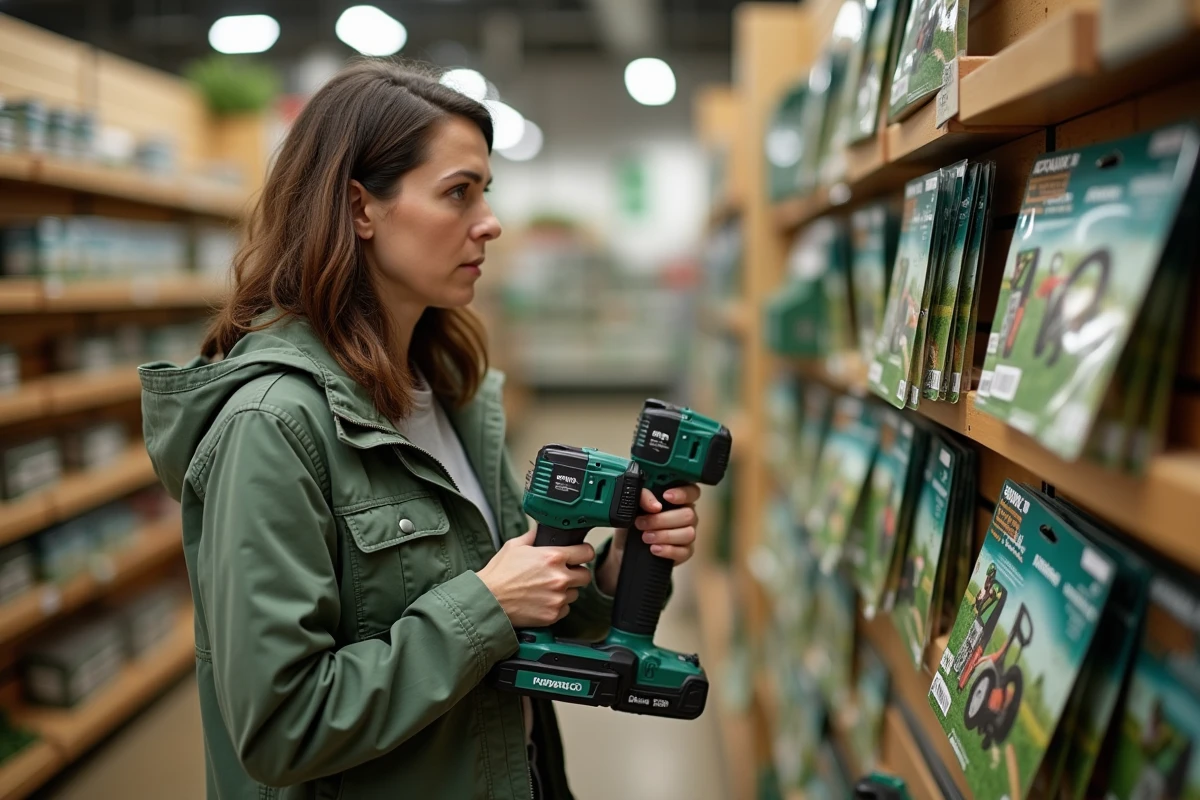
Cutting Line or Plastic Blade: Which System for Which Type of Edge
The cutting head with line remains the standard. The nylon line spins at high speed and cuts grass by impact. Its diameter, generally between 1.6 mm and 3 mm, determines wear resistance and the ability to cut tough vegetation.
- A 1.6 mm line is suitable for light finishing around flower beds and along paths, on regularly mowed lawns.
- A line of 2 mm to 2.4 mm covers the majority of domestic uses, including tall grasses and low hedge edges.
- Beyond 2.4 mm, we enter the territory of semi-professional rotary lines, useful for large plots or overgrown areas.
Some models replace the line with plastic blades fixed on a rotor. This system avoids frequent line replacement, but plastic blades lose precision on curved cuts. For a garden with winding edges or tree bases, nylon line remains more suitable.
The line advancement mode also matters. Automatic advancement systems detect wear and continuously release line. Semi-automatic systems require tapping the head on the ground. The former offers more comfort, while the latter provides better control of the exposed line length.
Gas, Electric Corded, or Battery String Trimmer: Deciding Based on Garden Size
Gas models have significantly declined in European catalogs over the past two years. Stage V emission standards and regulatory pressure on air quality in urban areas are pushing manufacturers to reduce their offering of two-stroke engines for consumers. Brands like EGO and Greenworks have already withdrawn certain gas-powered consumer lines from several Northern European markets.
For a modest-sized garden, a corded electric model is sufficient. It offers constant power without autonomy constraints, provided you can tolerate the extension cord. Its weight, often less than that of battery models, reduces fatigue.
The battery-powered string trimmer now dominates the mid-range segment. Its main advantage is freedom of movement, particularly appreciated in areas with obstacles (trees, garden furniture, walls). Green space maintenance professionals are massively switching to battery for urban contracts, which raises the entire range in terms of reliability.
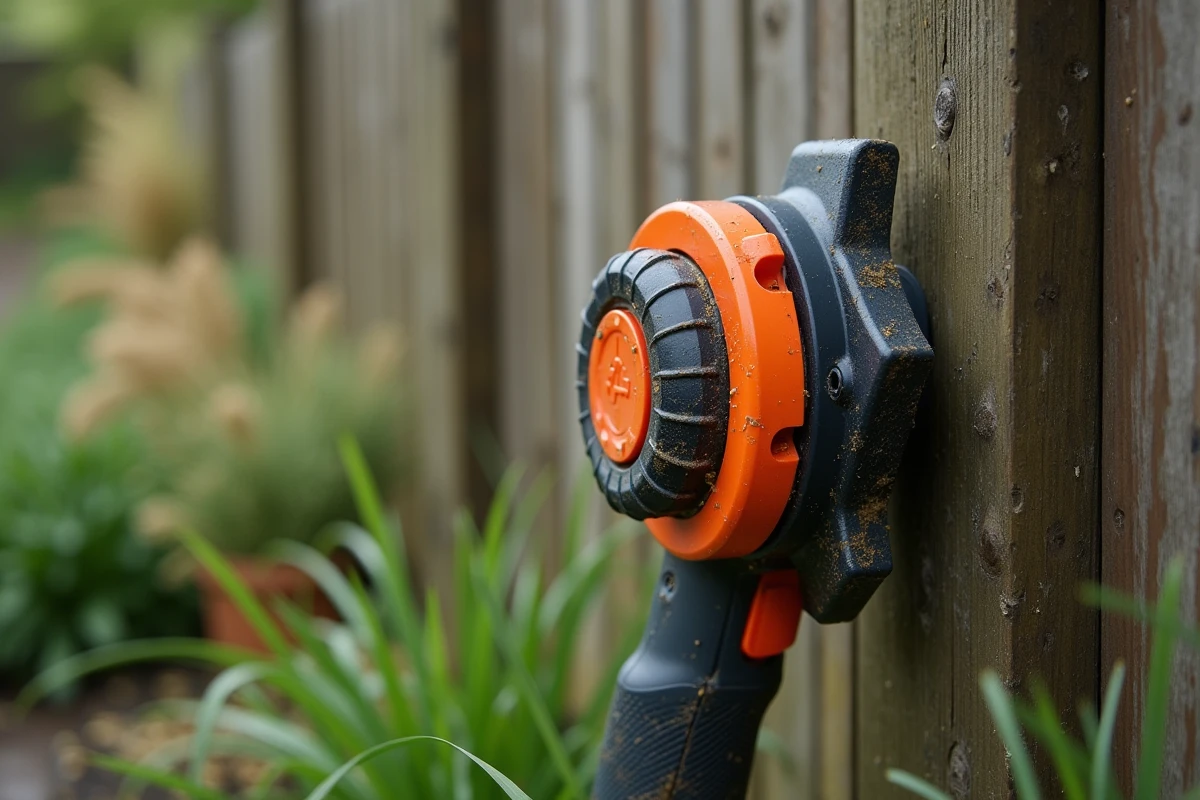
Battery Compatibility Among Garden Tools
A often decisive purchasing criterion: the shared battery platform among several tools. Bosch, Stihl, and Husqvarna offer ecosystems where the same battery powers string trimmers, hedge trimmers, blowers, and lawn mowers. Investing in a coherent ecosystem reduces overall costs and simplifies storage.
Ergonomics and Adjustable Head: What Makes the Difference in Use
The technical sheet does not tell the whole story. Two string trimmers of identical power can offer radically different experiences depending on the ergonomics of the handle, the balance of the machine, and the tilt of the cutting head.
- An adjustable or pivoting head allows switching to edge trimming mode (vertical cutting) to neatly define paths. Without this function, a separate tool is required.
- The auxiliary handle adjustable in height and angle adapts the working position to the user’s size, which limits back pain during prolonged sessions.
- A wide protective guard protects against flying stones and plant debris, especially at gravel edges.
The total weight in working order (with battery mounted and line in place) remains the best indicator of comfort. Manufacturers sometimes communicate the weight without the battery, which skews comparisons.
On the maintenance side, the replacement of the line spool should be possible without tools, in a few seconds. Quick-loading systems have become the norm on recent models, but some budget models still have screwed spools that complicate the operation.
The European regulation 2023/1542 on batteries now requires manufacturers and distributors to facilitate the collection and recycling of lithium-ion batteries. Husqvarna and Stihl have strengthened their in-store take-back programs. One point to check before purchase: the availability of a nearby collection point simplifies the end-of-life of the device.