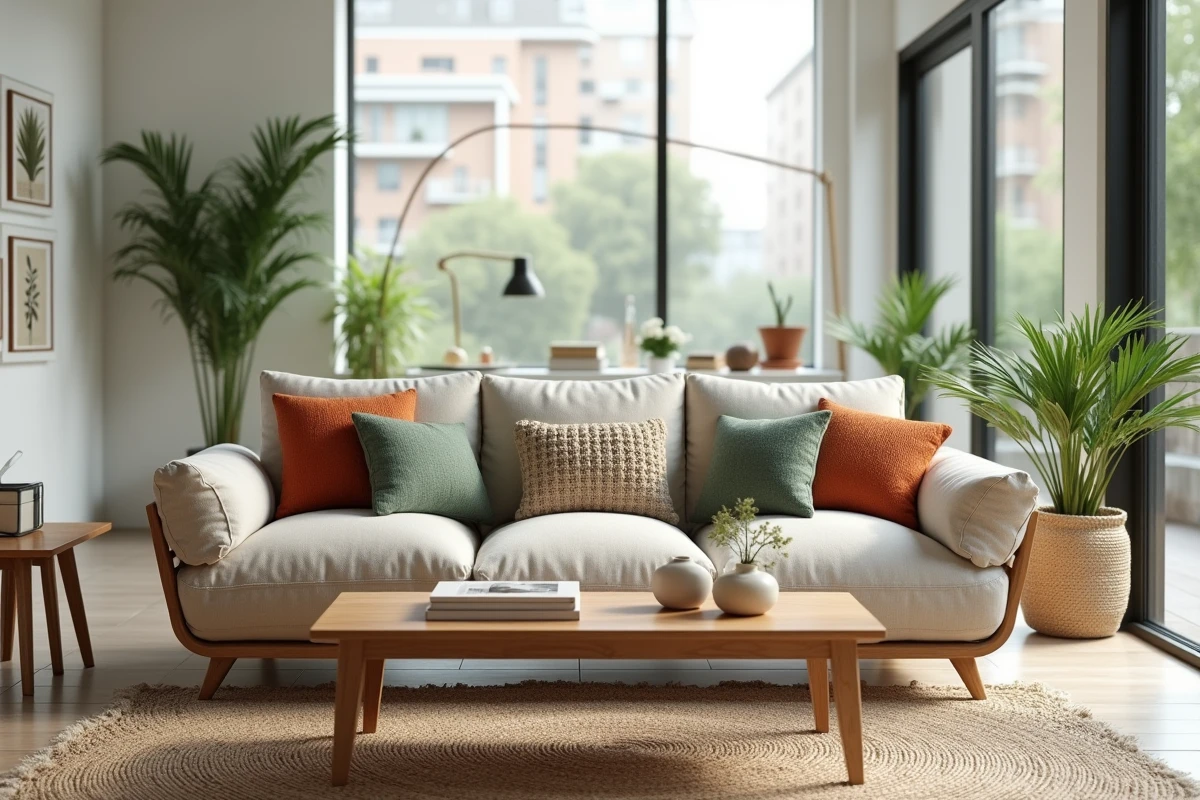
Changing a sofa or repainting a wall is not enough to transform an interior. What makes the difference is the coherence between materials, light, and the actual use of each room. Arranging and decorating a house with style requires thinking in layers: first the volume, then the surfaces, and finally the objects.
Materials and air quality: what your walls really emit
Have you ever noticed a persistent smell after laying laminate flooring or repainting a bedroom? This smell often comes from VOCs (volatile organic compounds), chemical substances released by paints, glues, and floor coverings for weeks after installation.
In Europe, an A+ rating indicates the least emitting materials. This pictogram appears on paint cans, wallpaper rolls, and floor coverings sold in France. Consistently choosing A+ rated products reduces the chemical load in your home without compromising aesthetic appeal.
For those wishing to access the home on Autour 2 Moi, the question of healthy materials arises from the very first decoration choices. A lime plaster, for example, naturally regulates humidity and emits almost no VOCs, while offering a highly sought-after matte finish in contemporary decoration.
In terms of furniture, solid untreated wood or eco-label certified pieces emit much less than low-quality particle boards. The initial cost is higher, but the durability more than compensates over the years.
Biophilic decoration: integrating nature for a calming interior
The term may sound technical, but the principle is simple: bringing the interior closer to nature reduces perceived stress. An article published in 2023 in Frontiers in Psychology showed that interiors incorporating vegetation and natural materials increase occupants’ satisfaction with their homes.
Specifically, biophilic decor relies on three levers:
- Living plants, not just placed on furniture, but designed as a structural element (narrow green wall in a hallway, large fern as a focal point in the living room)
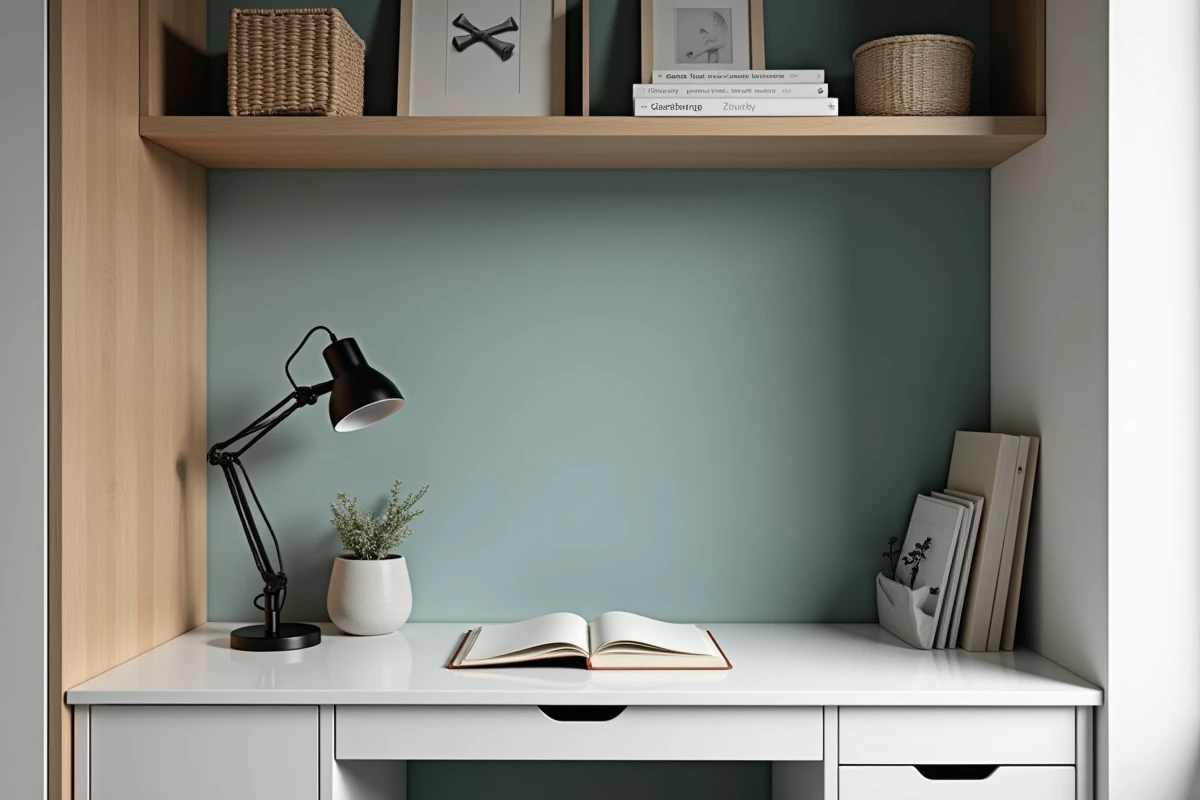
- Visible organic materials: raw wood, stone, linen, terracotta, rattan, which replace smooth and uniform surfaces with tactile textures
- Maximized natural light, by clearing windows of any tall furniture and using light curtains instead of opaque drapes
A common mistake is to accumulate plants without considering their placement. One well-placed plant is worth more than ten scattered pots. Place it where the eye naturally falls upon entering the room.
Artificial light and ambiance: going beyond a single ceiling fixture
A living room lit by a single central ceiling fixture produces flat light that flattens the volumes. To create depth and a true ambiance, at least three light sources should be layered in each main room.
Three levels of lighting to combine
The first level, general lighting, covers the room evenly. The second, task lighting, targets activity areas: kitchen work surface, reading nook, office. The third, ambient lighting, truly transforms the atmosphere: a string of lights along a shelf, a table lamp with a fabric shade, an LED strip behind a TV unit.
Why does this breakdown change everything? Because it allows you to modulate the intensity according to the time of day. In the evening, turning off the general lighting and keeping only the ambient sources is enough to make a living room warm, even with very simple furniture.
Color temperature: the detail that changes perception
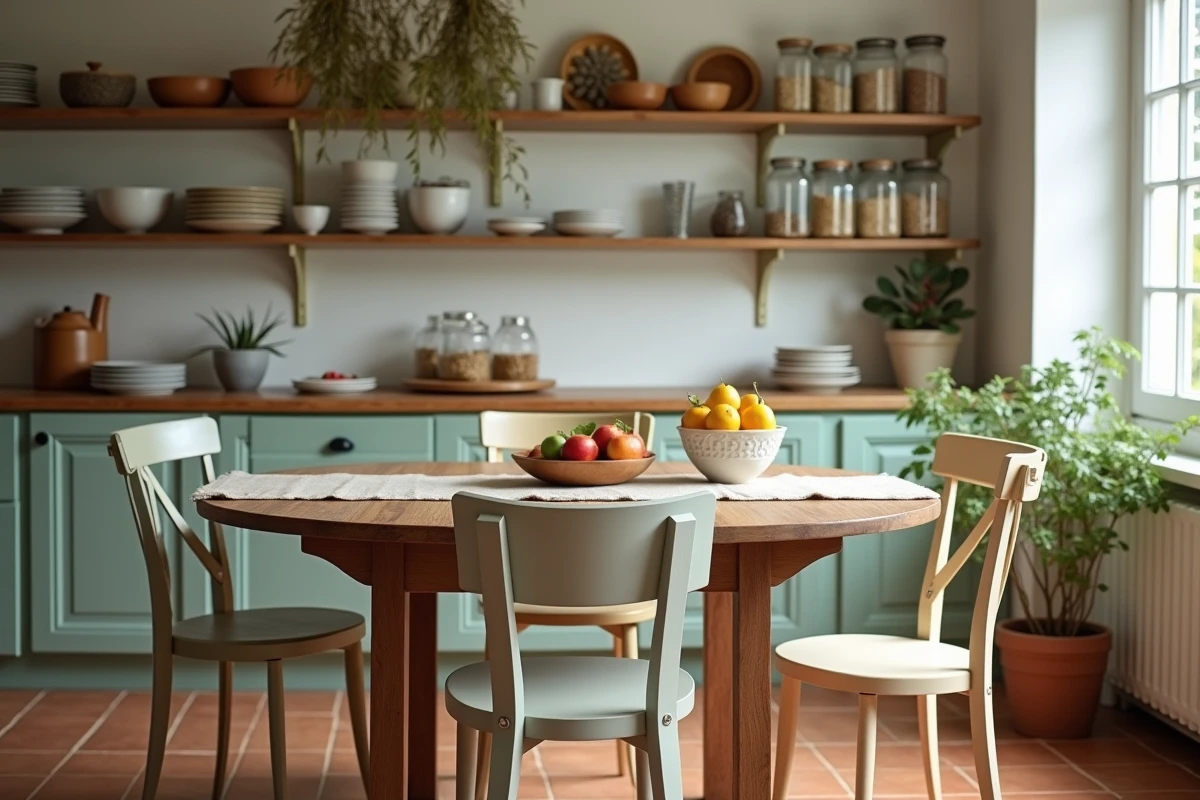
Light bulbs are distinguished by their color temperature, expressed in kelvins. Below 3,000 K, the light leans towards warm yellow, ideal for the living room and bedroom. Above 4,000 K, it becomes cool white, suitable for the office or kitchen. Mixing temperatures in the same room creates a visual inconsistency that the brain perceives without naming it, but which generates a diffuse discomfort.
Colors and proportions: the 60-30-10 rule applied room by room
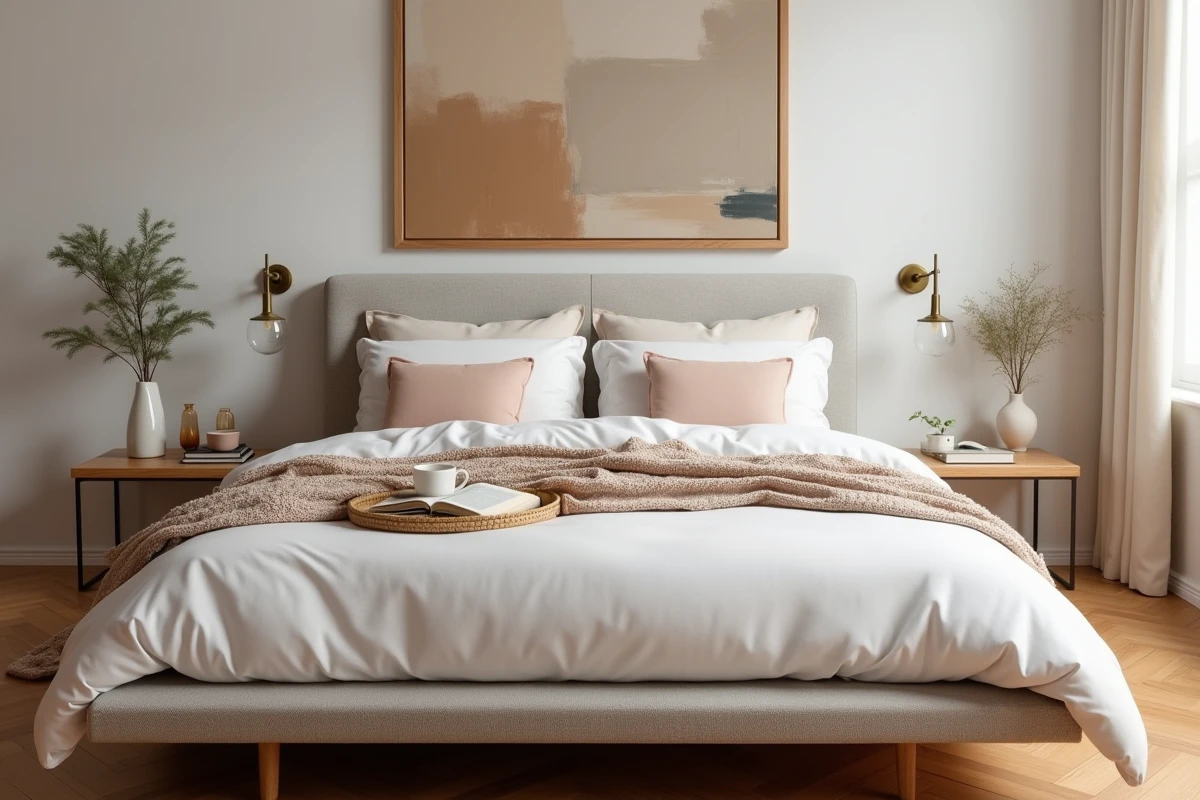
This method used by professional decorators structures the choice of colors without prior training. It can be summarized as follows: a dominant color covers about 60% of visible surfaces (walls, floor), a secondary color occupies 30% (textiles, large furniture), and an accent color provides contrast on the remaining 10% (cushions, vases, frames).
Let’s take a living room. Off-white walls and light oak flooring form the dominant. A charcoal gray sofa and linen curtains make up the secondary color. Two mustard yellow cushions and a terracotta ceramic vase provide the accent. The result appears harmonious because the proportions are respected, not because the colors are trendy.
Are you hesitating between two shades for your walls? Buy two samples and apply them to a square of at least 50 cm on each side, ideally near a window and close to a corner. A color changes radically depending on the light it receives. Testing on a small cardboard placed in the center of the room does not provide any reliable indication.
Living room layout: circulation and focal points
The living room is the space where layout mistakes are most noticeable. The first rule concerns circulation: leaving at least 70 cm of passage between each piece of furniture allows for movement without having to navigate around obstacles. If your living room is narrow, a corner sofa pushed against a wall frees up more floor space than a centered three-seater sofa.
The second concerns the focal point. Every living room needs an element that first attracts the eye: fireplace, large canvas, remarkable furniture. If no architectural element plays this role, create one with a wall painted in a contrasting shade or an asymmetrical wall shelf filled with a few chosen objects.
Avoid multiplying small decorative furniture. Two or three strong pieces (a velvet armchair, a solid wood coffee table, a sculptural light fixture) give more character than a dozen scattered accessories that fragment attention.
A stylish interior does not rely on a high budget or the latest trend spotted online. It depends on coherent choices between healthy materials, controlled light, and proper proportions. Start by correcting the lighting in your main room: it is the quickest and most noticeable change in daily life.