
When looking for family housing in Nantes, people often start by checking reviews about a neighborhood on forums. However, the reputation of an area may be ten years old, while renovation programs have transformed certain streets in the meantime. To make a solid choice, concrete criteria are needed: school district, public transport accessibility, level of nuisances by micro-sector, and urban construction schedules.
School district and IPS of middle schools: the criterion families overlook in Nantes
Before even looking at prices per square meter, one should check which middle school district the targeted address falls into. Public data from the Ministry of Education allows you to consult the social position index (IPS) of the schools, their results on the diploma, and their added value.
A neighborhood perceived as quiet may depend on a middle school with low indicators, and vice versa. The school district takes precedence over the neighborhood’s reputation when you have children enrolled in middle or high school.
You can cross-reference this information with the recruitment areas of Nantes middle schools, available on the academy’s website. To delve deeper into security issues, a resource details the neighborhoods to avoid in Nantes from a family perspective, combining field data and urban programs.
Nantes North: a rapidly changing neighborhood not to be judged by its reputation
Nantes North is often mentioned in lists of neighborhoods to avoid. Feedback varies on this point, as the area is changing quickly. The metropolis indicates that 784 housing units have already been renovated in ten years, and an additional 293 units are to be renovated by 2029.
A two-kilometer green walkway is planned for 2028. The overall project continues until 2032, with a school group, shops, and an additional 377 housing units. A household moving in today in certain sectors of Nantes North will live in a very different environment in five years.
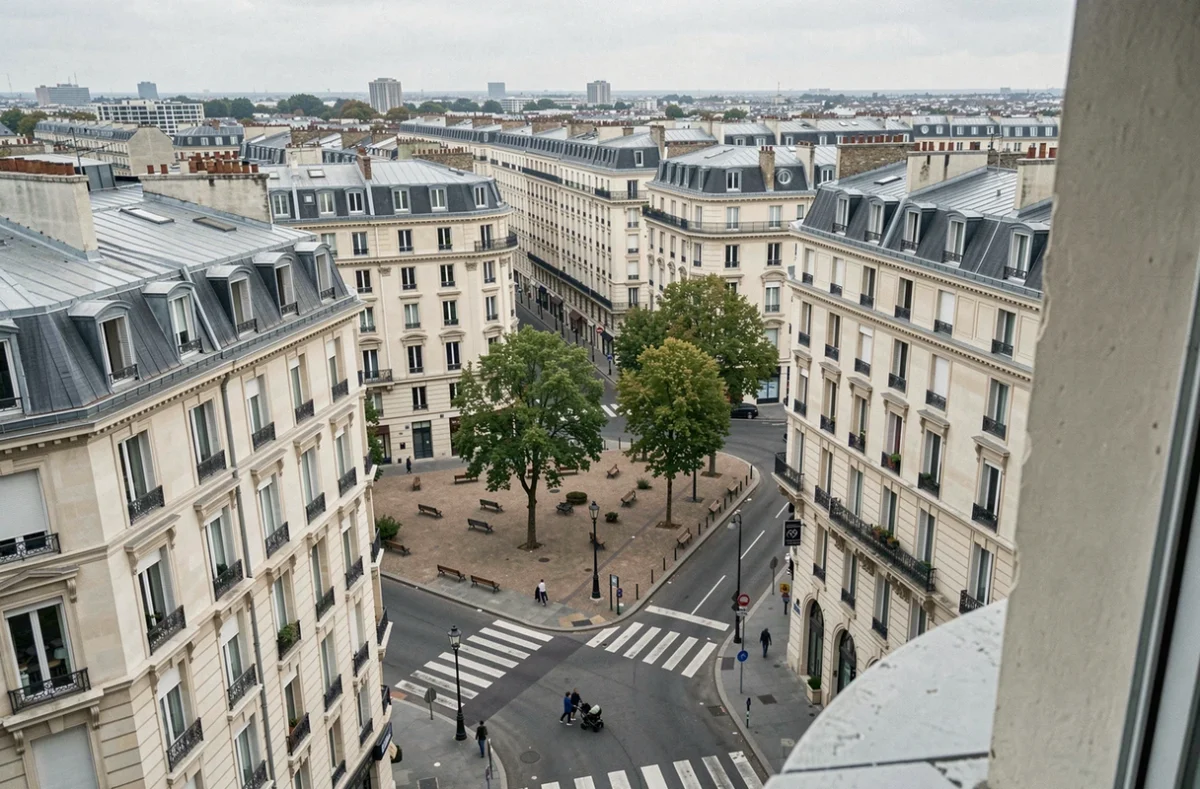
The trap would be to compare Nantes North to what was read in 2018. Families visiting the neighborhood now find that some renovated blocks have nothing in common with the old image. Other blocks remain under construction, with the associated nuisances (noise, dust, modified access).
Île de Nantes: variable safety depending on micro-sectors and times
Île de Nantes concentrates new real estate programs that attract young families. But the island is not a homogeneous block. The reported nuisances are concentrated around nightlife areas, such as the Hangar à Bananes sector and some major thoroughfares: noise, incivilities, and occasional thefts.
The residential sectors of the island present a different reality. A family moving into a new program on the south side of the island will not experience the same situation as a tenant near the festive quays. Before signing, it’s beneficial to visit the neighborhood on a Friday night and a Sunday morning to gauge the difference.
The island also remains a massive urban construction site that is expected to continue. This means temporarily closed streets, detours by car, and daytime noise for several years.
Bellevue and Dervallières: renovation programs and daily reality
Bellevue and Dervallières-Zola are regularly ranked among the sensitive neighborhoods of Nantes. The construction of new residences is underway in Bellevue, indicating a desire to transform the housing stock. A neighborhood under renovation is not yet a renovated neighborhood: the construction phase can last several years, with gradual results.
For a family, the question to ask is not “Is this neighborhood safe?” in general, but rather:
- Which middle school district serves the address, and what are its results and IPS?
- How far are the shops, medical office, and tram line?
- Does the urban renovation program foresee short-term deliveries (before the children start middle school) or a horizon of 2030 and beyond?
- Do the reported nuisances (noise, traffic) affect the targeted block or an adjacent area?
Malakoff and Bottière: looking beyond the “neighborhood to avoid” label
Malakoff and Bottière appear in almost every article about difficult neighborhoods in Nantes. The two areas share a common point: the reputation often rests on facts concentrated in a few specific streets, not on the entire perimeter.
In Malakoff, the proximity to the city center and the train station remains a concrete asset for daily commutes. The neighborhood has undergone demolition-reconstruction operations that have reshaped certain blocks. In Bottière, the Pin Sec-Bottière sector has been the subject of urban renewal programs, while other portions remain marked by tensions.
Rather than crossing these neighborhoods off the list, one can refine the search street by street. A reasonably priced T4 in a renovated block of Malakoff, close to a well-rated school, may be a better family choice than a more expensive housing unit in a “quietly reputed” area but far from everything.
Checklist before signing a lease or deed in Nantes
Here are the concrete checks that avoid unpleasant surprises, regardless of the neighborhood:
- Consult the IPS and results of the middle school district on public data from the Ministry of Education
- Check the urban construction schedule on the Nantes Métropole website to anticipate nuisances
- Visit the address at different times (morning, evening, weekend) to assess noise and the actual atmosphere
- Identify the walking distance to the nearest tram or busway stop
- Check if the housing is located within an urban renovation perimeter, which may affect the medium-term value, positively or negatively
A “neighborhood to avoid” on a forum may be a good family choice at the street level. Cross-referencing school data, the urban project schedule, and direct observation of the area remains the safest way to decide. In Nantes, as elsewhere, nuance plays out at the micro-sector level, not at the neighborhood name level.