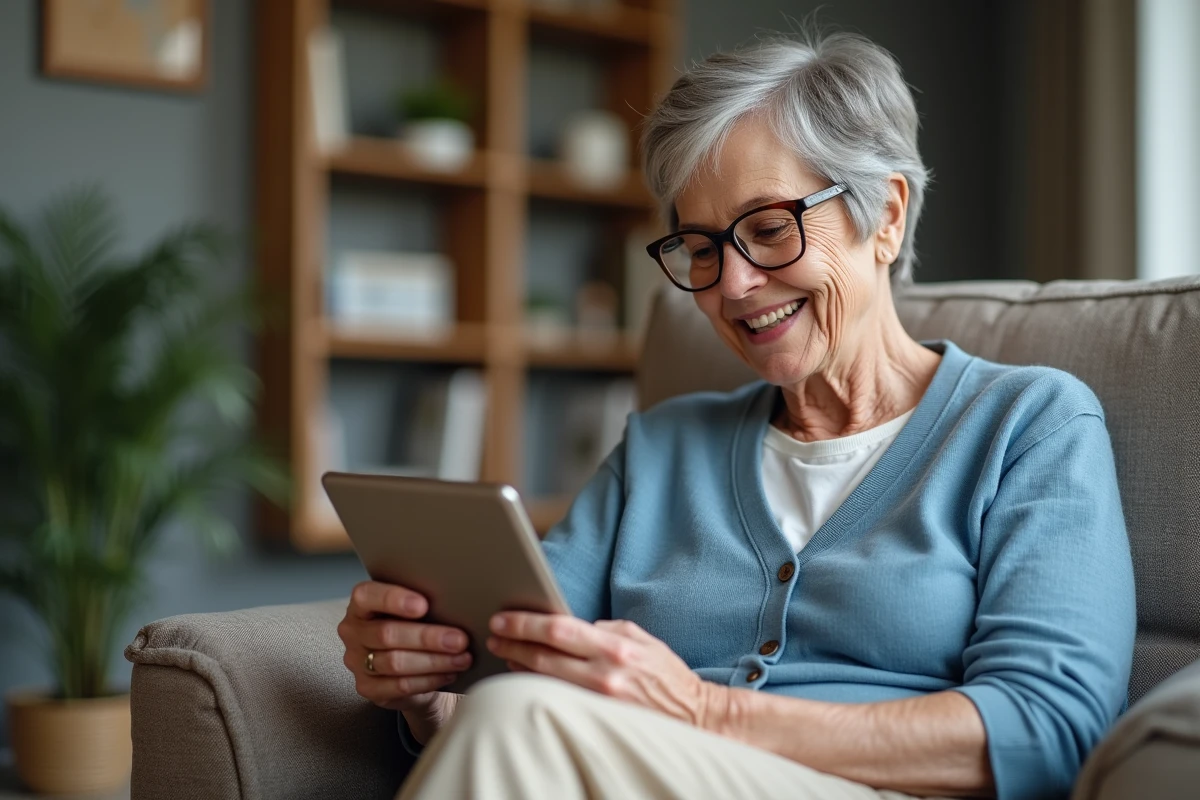
In France, nearly 90% of those over 75 express the desire to stay at home for as long as possible, even as dependence increases with age. However, traditional home support systems struggle to keep up with the rapid growth of the elderly population. Faced with this contradiction, companies and researchers have multiplied technological innovations to meet specific needs. Some tools, still relatively unknown, now enhance safety, improve comfort, and preserve daily autonomy, while facilitating connections with loved ones and healthcare professionals.
Why technological innovation is changing the daily lives of seniors at home
Staying at home and living fully: this is a goal that seniors are claiming today, and modern technology is beginning to make it truly accessible. Advances in connected devices, teleassistance, and coordination tools are revolutionizing home support. Fall detectors, smart sensors, remote medical monitoring… These are solutions that are no longer reserved for insiders. Interfaces are becoming more intuitive, notifications are tailored to each profile, and handling these tools is proving to be more straightforward than one might think. Seniors no longer have to make excessive efforts to adopt these innovations, as utility and simplicity finally take precedence. A site like https://www.astelos-senior.com/ perfectly illustrates how human support and digital solutions work together to establish trust and serenity in daily life. Far from diminishing autonomy, technology restores control and provides reassurance. Eight out of ten equipped seniors feel safer at home: reality surpasses discourse and alleviates the fear of being forced to leave their homes one day.
What concrete tools are available to preserve autonomy and safety at home?
Home care today relies on a whole range of innovations designed to prevent vulnerabilities without encroaching on privacy. Connected objects provide real-time information, signal anomalies, but know how to remain discreet. Artificial intelligence refines alerts, learns routines, and raises any concerning changes: daily life becomes lighter, and safer too.
- Motion sensors and presence detectors: placed where needed and forgotten in everyday life, they alert loved ones in case of prolonged immobility. A discreet safety net that acts against isolation.
- Teleassistance devices: a button within reach or a pendant, just a press is enough to contact a listening center that assesses the situation and triggers the appropriate intervention.
- Coordination applications: digital tools that facilitate appointment management, remind treatment schedules, and streamline communication between caregivers, family, and home professionals.
Among the solutions that secure and simplify life at home, we find:
The benefits are immediate: families feel reassured, caregivers are relieved in their organization, and professionals can adapt their follow-up more quickly. Each link in daily life benefits from increased vigilance without sacrificing autonomy. The connection with loved ones remains intact, even from a distance, and life at home gains new perspectives.
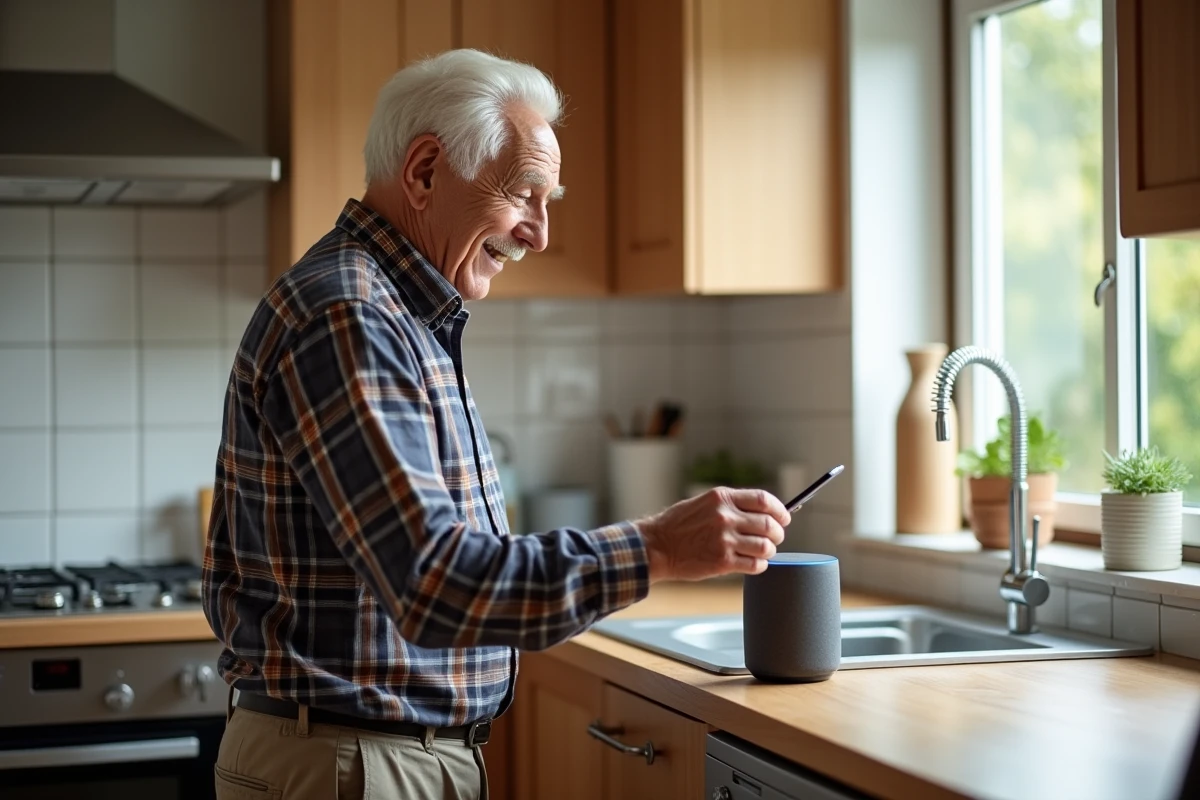
Connected applications and devices to simplify everyday life
Technology, adopted wisely, can transform daily life without altering its essence. Smartphone or tablet applications make health and appointment management smoother. Reminders, alerts, organization of caregiver visits: no more forgetfulness that undermines trust. Other solutions stimulate memory, offer fun exercises, or promote intergenerational exchanges with a simple gesture.
Progress doesn’t stop there: connected blood pressure monitors automatically transmit data to healthcare professionals, activity sensors monitor routines while protecting privacy, and families are notified if unusual movement occurs. Ultimately, a caring presence that never imposes itself but reassures when needed.
- Messaging and video call applications: they promote exchanges, moral support, photo sharing, and break down family distance.
- Reminder tools: medications, hydration, appointments… Regular alerts allow one to stay in control of their organization without stress.
- Environmental sensors: monitoring temperature, humidity, or smoke to ensure a healthy and responsive living environment in case of danger.
Here are several concrete and accessible tools that simplify and secure daily life:
Through these advancements, the silver economy is inventing a new way to age at home: active, surrounded, connected but never dehumanized. Digital tools do not replace family or caregivers; they simply support this connection, discreetly. The horizon no longer darkens with age: aging at home becomes a fulfilled promise, where worry gives way to trust and freedom.
Tomorrow, the home will age with us, attentive, protective, and designed to accompany every stage of life, simply.